A doctor opening a first lab
You know the medicine but not the build. We handle feasibility, layout, equipment and licensing so you are not learning each step as it arrives.

Your trusted partner for laboratory setup, hospital consultancy, diagnostic solutions and healthcare finance support.
Structured laboratories are vital in India to meet the rising demand for accurate diagnostics, driven by population growth, chronic diseases, and medical tourism. Well-organized labs ensure efficient workflows, reduce errors, and provide access to advanced technology, improving test accuracy and healthcare outcomes while meeting international standards for quality care.
Our laboratory consultancy offers end-to-end support for building and growing diagnostic laboratories, covering everything from market analysis and facility setup to licensing/accreditation support. It also provides tailored test menu strategies, staff training, and equipment procurement guidance to ensure efficient, compliant operations. Additionally, it helps labs with marketing and branding strategies to attract and retain patients.
You know the medicine but not the build. We handle feasibility, layout, equipment and licensing so you are not learning each step as it arrives.
You need the numbers to hold up before you commit. We size the equipment to the catchment and tell you what the project realistically needs.
You already run a facility and want diagnostics in-house. See our Hospitals page for the in-house lab and diagnostics wing in detail.
Market analysis and opportunity assessment for your location, followed by a tailored test menu and strategy review so you start with the tests your catchment actually needs.
Facility design that zones sample collection, processing and reporting, with benches and instruments arranged in sample-flow order.
Equipment planning and procurement guidance, matching analysers to your test menu and expected sample volumes, through to installation.
Support with licences, registrations and accreditation, including the documentation and standard operating procedures a lab needs to work towards NABL.
Staff training and support through commissioning, plus marketing and branding strategies to attract and retain patients from launch.
Three sizes we are asked for most often, with the space, team and budget each one usually needs. Figures are indicative and move with your city, premises and test menu — we cost your lab properly at the feasibility stage.
Budgets cover setting the lab up — equipment, interiors, licensing and launch. They exclude rent, deposits and working capital, which we plan with you separately.
Requirements vary by state and by the size of your premises, so treat this as a starting checklist. We help you work out which apply to your lab.
Or your state’s equivalent
From the State Pollution Control Board
Where the building size requires it
From the local body
A widely recognised quality mark
Which of these apply depends on your state and premises. We confirm the list for your lab and prepare the paperwork with you.
Answered by our founding doctors from the labs we have set up across India.
Not at all times. In India the pathologist is the authorised person who verifies results, does the clinical correlation and signs the reports. For a mid-level or reference-style lab you need one in person, full time. A basic lab can run with a pathologist available rather than resident.
For biochemistry and microbiology investigations, a specialist in that discipline — MD Biochemistry or MD Microbiology — can verify and sign those reports.
Imaging works differently: a radiologist must be present for ultrasound, CT and MRI. For plain X-rays an in-house radiologist is not necessary.
Ideally 300 to 500 sq ft is a comfortable size to start with. A compact basic lab can work in less, but the extra room pays for itself in sample flow, storage and the space you need as volumes grow.
In our experience it is best to begin the process about six months after the centre opens, once the lab has real records behind it. The process itself then takes around six months. So a new centre can realistically plan to be NABL accredited within a year of opening.
The registrations that apply to a diagnostic laboratory in India are:
An imaging centre additionally needs PCPNDT registration. Exactly which apply depends on your state and premises — see the full checklist above, and we confirm the list for your lab and prepare the paperwork with you.
A working lab is usually built around these roles:
How many of each depends on your size and daily volumes — see the three lab sizes above for the usual headcount.
Yes, you can open without it and plan to get accredited within about a year. We do advise starting with a basic ISO quality certification in the meantime, so the lab is already working to a documented standard by the time you go for NABL.
Start with these four guides. They cover what a small lab costs to open, the equipment you will need, how to pick an analyser, and the mistakes that catch first-time owners out.
End-to-end support for building, launching, and scaling diagnostic laboratories in India from market analysis and facility setup to licensing, staffing, and patient-focused branding.
A closer look at completed projects — how each space is zoned, which analysers are installed, and how the workflow is planned from sample collection to reporting.
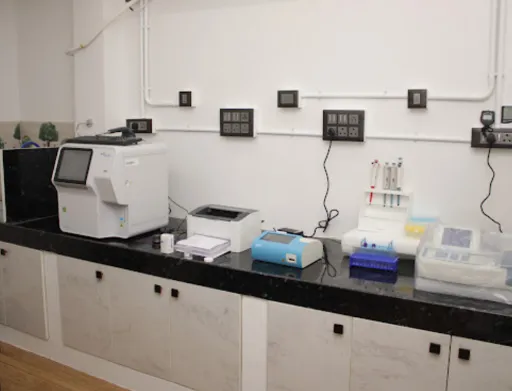
A granite bench with the analyser, printer and pipette stand arranged in sample-flow order.
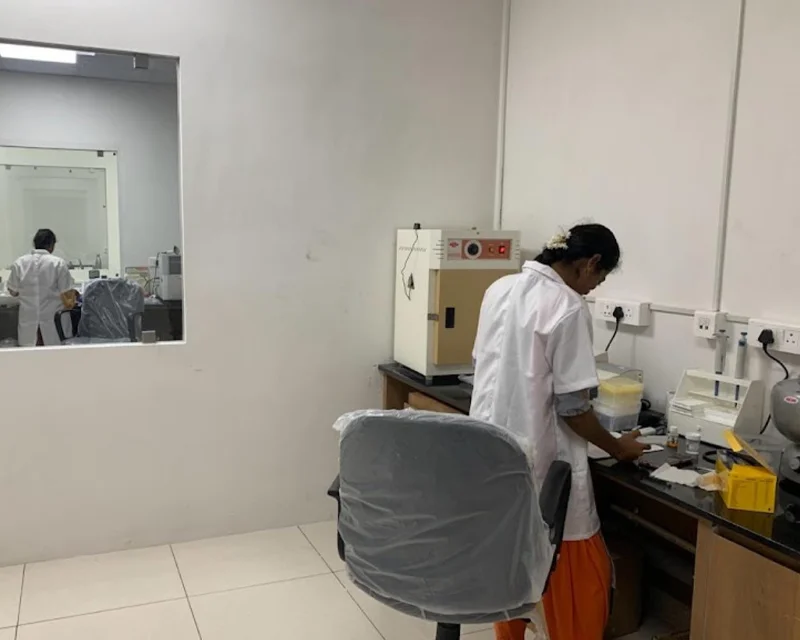
A dedicated prep station with a hot air oven and a glazed partition keeping the processing zone separate.
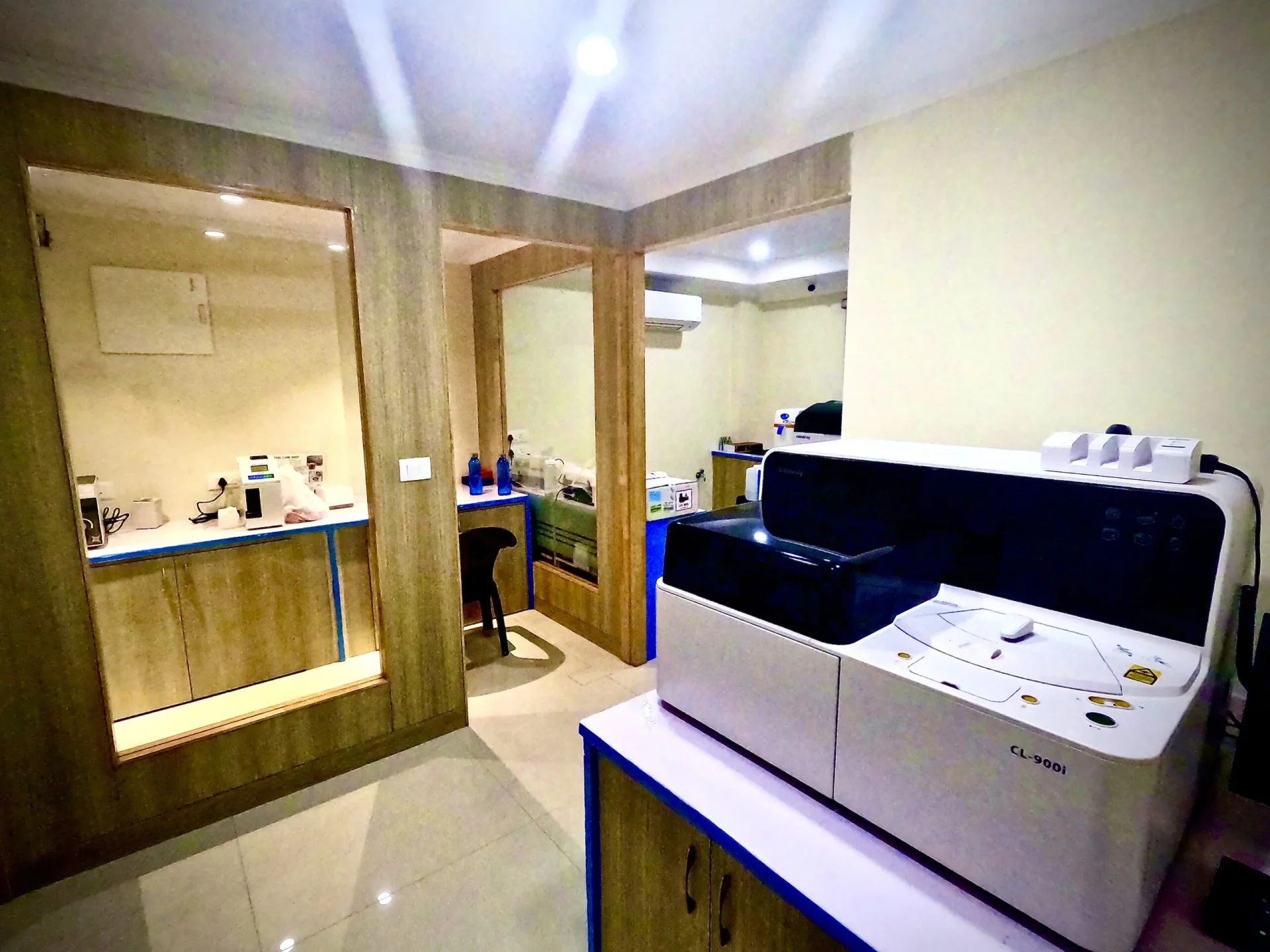
A finished interior built around a chemiluminescence immunoassay analyser, zoning patient and technical areas apart.
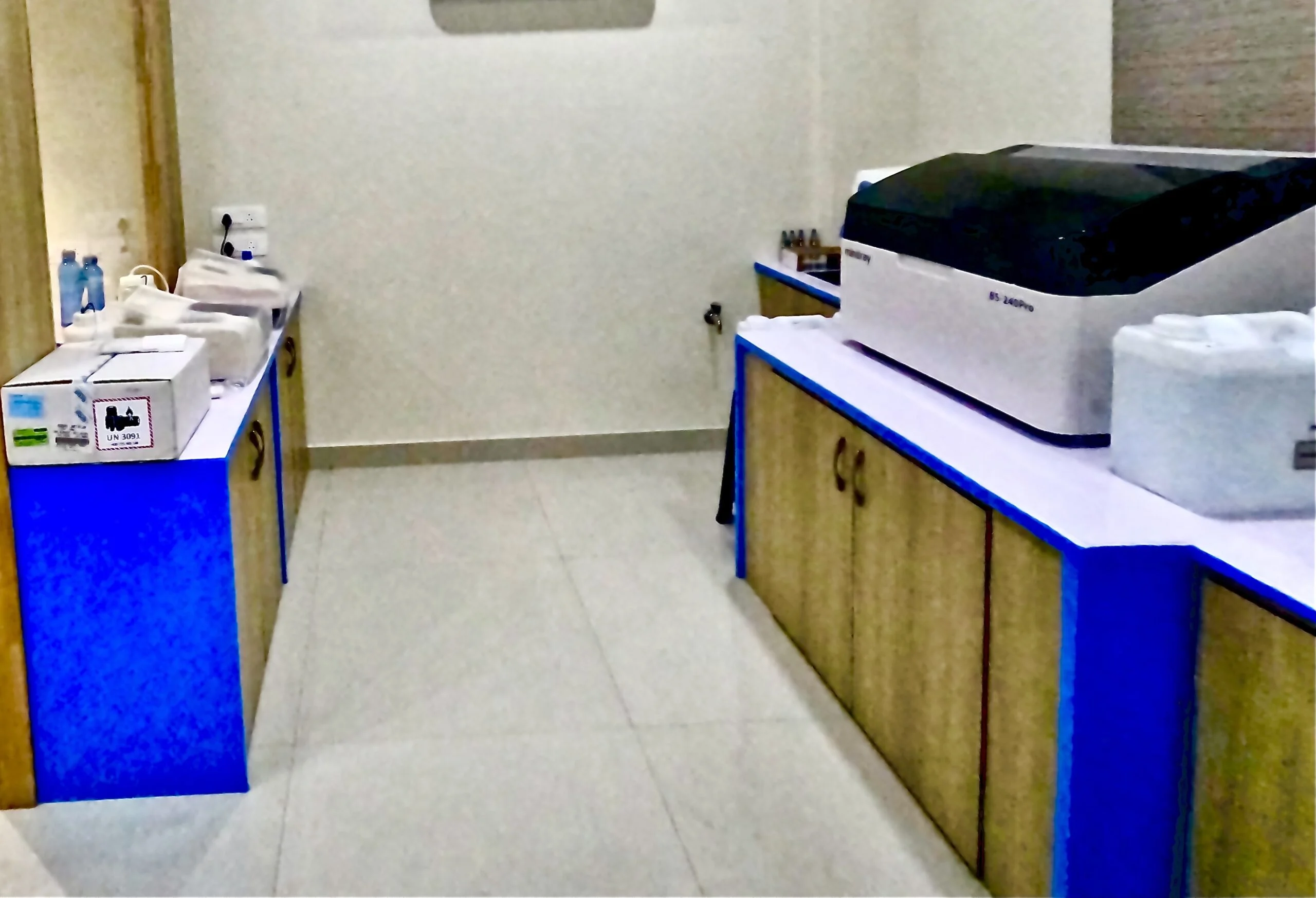
A clinical chemistry analyser on modular casework with reagent storage below and wide, clear aisles.
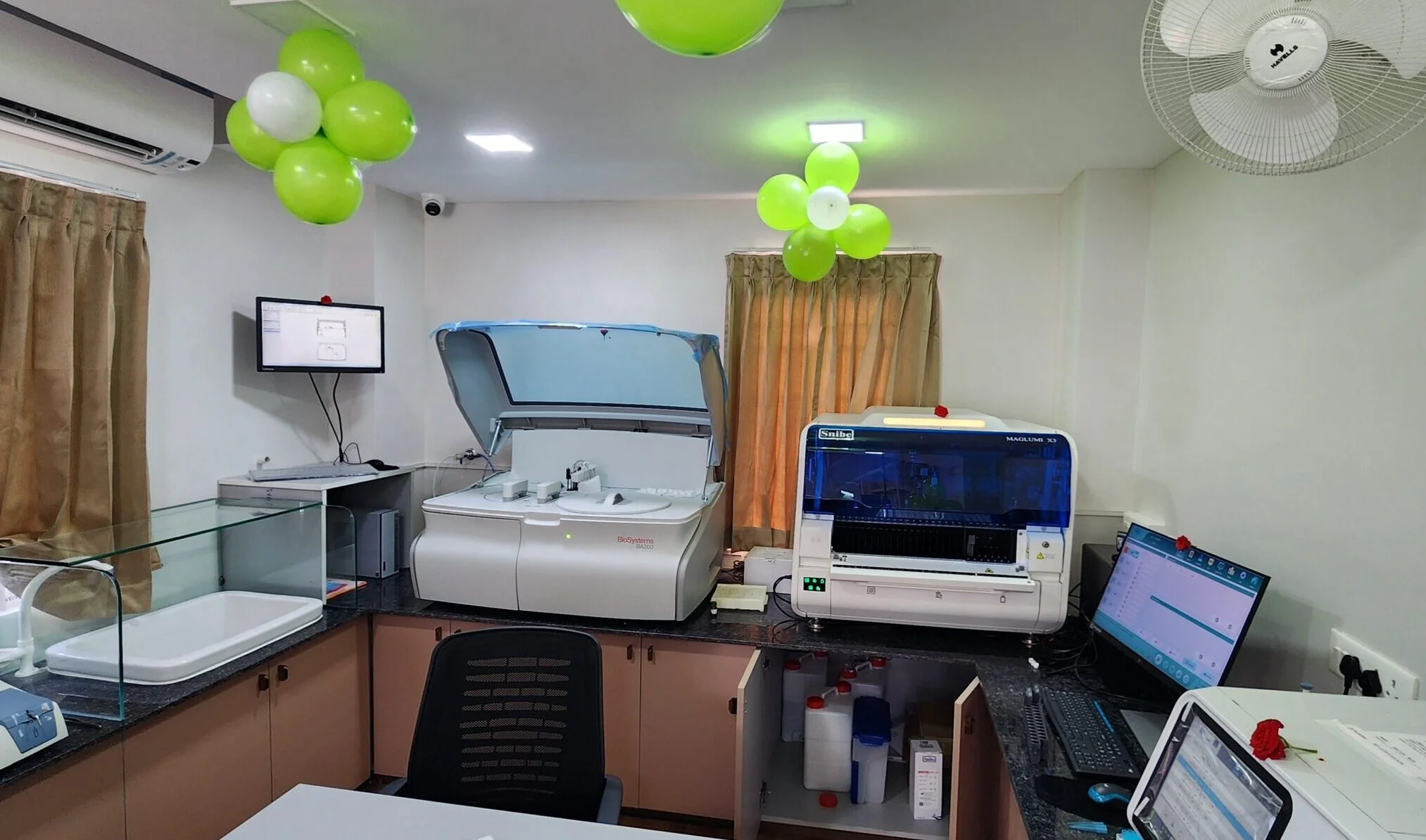
Opening day, with analysers installed, calibrated and linked to reporting terminals for the first live samples.
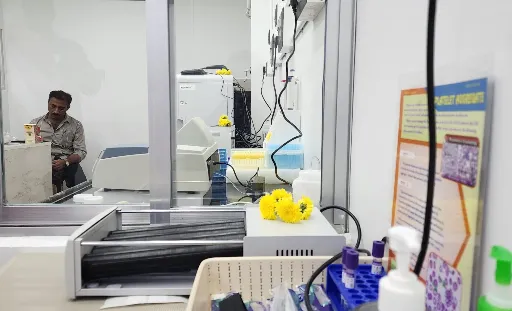
The patient-facing collection point, glazed off from the processing area to reduce contamination risk.
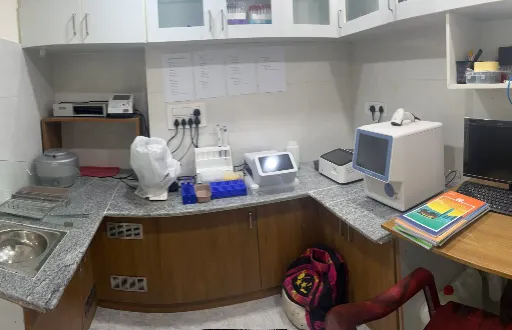
A curved bench and overhead storage keep every instrument within reach in a small footprint.
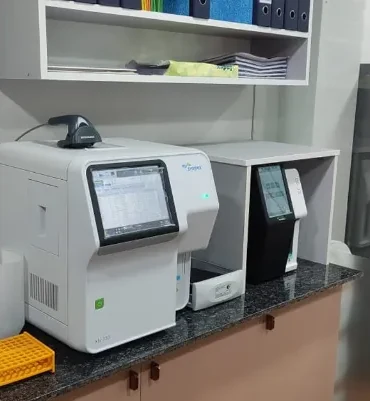
A haematology analyser with barcode sample identification beside dedicated record storage for full traceability.
.webp)
Expert consultancy for planning, finance, equipment, licensing, and operational support.